
There is a moment in a good pottery class when the room goes quiet, everyone's hands are busy, and nobody is thinking about anything else. You don't need talent to get there. You need the right room, the right tutor, and a realistic idea of what you're signing up for. Finding a class in the UK is less about luck than about asking a few sensible questions before you pay.
Decide what you want before you start looking
Hand-building — pinch pots, coils, slabs — suits people who like slow, deliberate making and want to finish something in the first session. Wheel throwing is a different bargain: thrilling, physical and humbling. Very few people make a tidy cylinder on their first attempt, and that's normal.
Glazing and surface decoration are usually taught inside a longer course rather than on their own, so if glaze chemistry is what interests you, look for a term-long class rather than a taster.
Then decide how much you're committing to. A single taster session tells you whether you enjoy clay at all. A six- to ten-week course is what actually builds skill. If you want to be competent on the wheel, think in months, not afternoons.
Where pottery classes are advertised in the UK
- Adult education services and colleges. Local authority evening classes and further education colleges often run ceramics courses. They fill quickly, and waiting lists are normal.
- Working potteries and community studios. Some of the best teaching happens in small studios run by potters who make and sell their own work.
- Arts centres, galleries and museums. Many host short courses, weekend workshops and family sessions.
- Local ceramic societies and potters' guilds. Useful for finding members who teach privately or know who has space.
- Open studios events and craft fairs. Talk to the potters. They know the local landscape better than any search engine.
- Noticeboards. Libraries, cafés, art shops and village halls still carry handwritten cards for small classes.
Search with the words people actually use: "pottery class" plus your town, "ceramics evening class adult education", "wheel throwing course" plus your county, or "hand-building workshop near me". Check a studio's social media for photographs of student work and its timetable. Get on the waiting list even when a course is full — places open up at the start of term.
Reading a listing like a potter
A class description tells you more than the title suggests. Look for class size, how many wheels are available, and whether clay, glazes and firings are included.
Firing is the detail people miss. Some studios include everything. Others charge for firings by weight or per piece, or run glazing as a separate follow-up session. None of these arrangements is wrong, but you should know which one you're booking.
Housekeeping matters too. Clay dust is the main health consideration in any studio, so look for damp-cleaning rather than dry sweeping, and a space that doesn't feel gritty. If you have a respiratory condition or sensitive skin, ask the tutor how dust is managed and mention it before your first session. For anything medical, speak to your GP.
Questions to ask before you book
- How many students are in the class, and how many wheels are there between us?
- Are clay, glazing and firing included? What happens if I make extra pieces?
- Will I take finished work home, and roughly how long will that take?
- Is the class beginners-only or mixed ability?
- Can I book a taster before committing to a full course?
- What should I wear and bring?
- Is the studio step-free? Can it accommodate a wheelchair at a wheel, and is there guidance for left-handed throwers?
- What is the refund or transfer policy if I can't attend the whole course?
Ask these by phone or email before you pay rather than on the first evening. If a studio is vague about any of it, that's information too.
What a first workshop is actually like
Before you go
Trim your nails short. Tie long hair back. Leave rings and bracelets at home, and wear clothes you don't mind staining — clay washes out of most fabrics but not cheerfully. Closed shoes, an apron or old shirt, and a hand towel are all useful. Bring a box or bag for anything damp you're allowed to take away.
On the day
Expect a tour, a demonstration and a lot of listening. Most first sessions begin with wedging — kneading clay to remove air pockets — then a simple exercise: a pinch pot, a coil-built form, or centring on the wheel. Centring is the difficult part and it takes practice. Your early pots will be uneven. That is exactly how everyone starts, including your tutor.
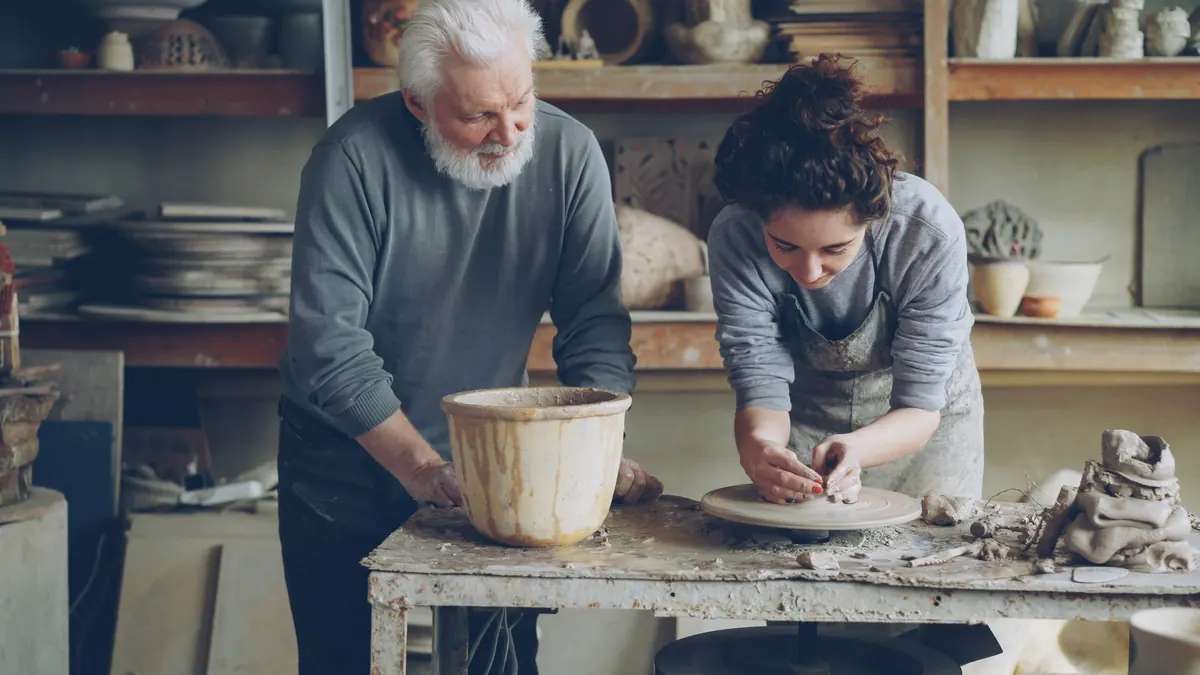
Teaching styles differ. Some tutors demonstrate and then circulate; others sit at a wheel beside you and guide your hands. Both work. What matters is that you can ask questions without feeling rushed, and that you get hands-on correction rather than a description of the motion.
The waiting part
Unless the session uses air-drying clay and is billed as make-and-take, your work won't come home that day. It needs to dry slowly, be bisque fired, then glazed and fired again. That can take several weeks, especially if the studio fires one kiln load for the whole group. Ask when collection is and where.
Pace yourself, too. Throwing is physical: wrists, shoulders and back all join in. Take breaks, drink water, and don't measure your progress against the person at the next wheel.
A short checklist before you book
- Decide your aim: a fun evening, a new hobby, or genuine wheel skills.
- Check the basics: class size, number of wheels, what's included, collection dates.
- Confirm access, parking, and whether there's a waiting list.
- Ask about clothing, dust management and anything medical.
- Book a taster if you're unsure, and join the list for a longer course.
- On the first night, arrive early — with short nails and a towel.
Then relax and let the clay do the talking. And if the first class isn't right for you, another one will be.
Photo: Vitaly Gariev / Pexels